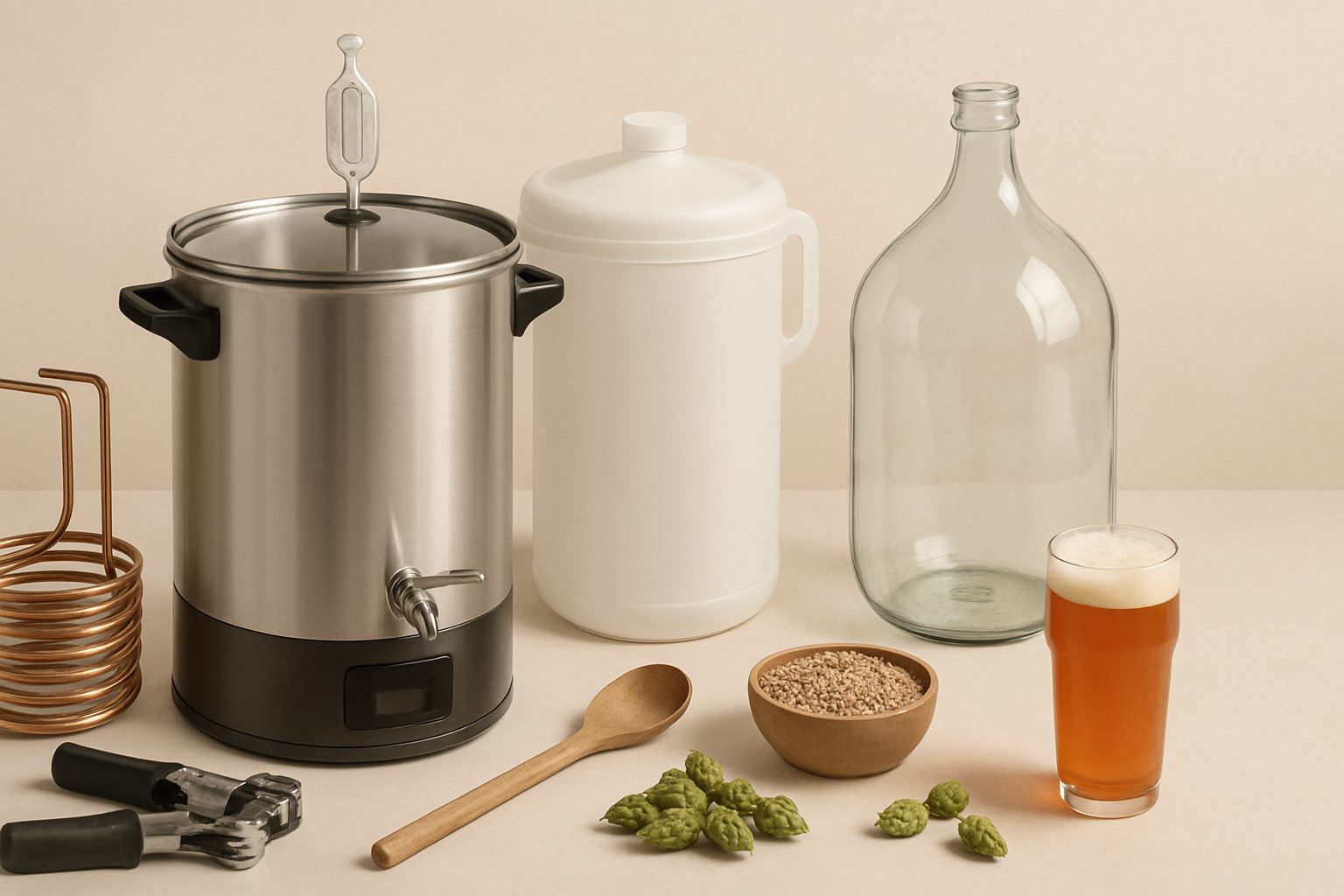
Best Home Brewing Gifts UK 2025: Systems, Kits & Accessories for Every Budget
Buying for a home brewer can be tricky. They might have specific gravity meters, or they might not. They might want equipment they can actually use, or they might appreciate something that just makes brewing less tedious. The good news: there are genuinely useful gifts across every price point, whether the brewer is starting out or five years into perfecting their technique.
Starter Kits: Under £100
If someone's been talking about brewing but hasn't committed yet, a starter kit removes the barrier. These aren't toys—they're functional setups that produce proper beer.
Young's and Coopers dominate this space. Both sell complete kits with plastic fermenters, airlock, thermometer, and instructions. The difference is minimal; pick based on style (ale vs. lager) rather than brand loyalty. Expect to spend £40–£70. The plastic fermenter is genuinely adequate for first batches, though many brewers upgrade to glass after one or two.
Brewdog's kits sit at the higher end of this bracket (£60–£80) and lean toward higher alcohol content beers, which is fine if the recipient likes stronger brews. They're not objectively better—just different.
The catch: these kits don't include a bottling wand or siphon. After fermentation, moving beer without one is messy and aerates it unnecessarily. A basic siphon kit (£8–£12) makes it essential gift pairing material.
Practical Gadgets: £15–£50
This is where you solve real problems without committing to big equipment.
Hydrometers and testing jars (£12–£25) matter more than people realise. A digital scale or hydrometer tells you actual gravity readings, which means you know when fermentation's finished instead of guessing. It's the difference between dry beer and bottled mush.
Temperature strips (£5–£10) are cheap but essential. Fermentation temperature massively affects flavour, and most home brewers ferment in basements or cupboards without climate control. A strip on the fermenter's side takes the guesswork out.
Bottling wands (£8–£15) do one thing exceptionally well: fill bottles without aerating or losing half your brew to the floor. If the brewer uses one now, they'll never go back.
Stainless steel measuring spoons (£10–£20) aren't exciting, but dry hops and grains need accurate measuring. Plastic warps and holds flavour; stainless doesn't. Boring gift, genuinely appreciated.
PH strips or a cheap PH meter (£15–£35) help brewers understand their water. If water chemistry intimidates them, skip it. If they're already asking about it, they'll use this constantly.
Fermentation Upgrades: £50–£150
The plastic fermenter works, but glass is objectively better for long-term brewing. It doesn't absorb flavours or scratch, and you can actually see what's happening inside.
A 30-litre glass carboy (£40–£70) suits most home brewers. Narrow-mouth designs are easier to clean; wide-mouth ones let you fit a hand in for serious scrubbing. Be honest: glass is fragile. Many brewers break one before learning to handle it. If the recipient seems accident-prone, this might not land well.
Temperature control matters more than vessel type. A cheap fridge with an STC-1000 controller (£50–£80 total, sometimes less) lets them brew lagers in summer and ales in winter without environmental guesswork. It's not glamorous, but it transforms consistency.
Conical fermenters (£100–£200) collect trub at the bottom for easy dumping, which saves time and produces cleaner beer. They're an upgrade worth buying themselves, not receiving, so skip these unless they've specifically asked.
Ingredients & Consumables: £20–£60
Serious brewers love ingredient variety. Specialty hop packs (£15–£30) let them try new combinations without committing to five kilos. Brands like Brewdog and Nomad Ales sell curated hop selections; if the brewer has a style preference (IPAs, pale ales, sours), match it.
Yeast bundles (£20–£40) work similarly. Different strains produce wildly different flavours from identical recipes. SafLager, Wyeast, and White Labs all sell UK-wide. If you're unsure, stick with ale yeast—it's more forgiving.
Specialty grains (£15–£35) packs from companies like The Malt Miller let partial-mash brewers experiment beyond basic kits. This only works if they're already doing partial mashing or all-grain brewing, though.
Cleaning tablets and sanitiser (£15–£25 per set) are unsexy but genuinely needed. Star San or Chemsan disinfects without rinsing, which saves time and prevents infection. A six-month supply is a low-friction gift.
The Better Idea
The best gift often isn't equipment at all: it's time or access. A gift card to a homebrew supply shop lets them choose exactly what they need without you guessing. Alternatively, offer to help them brew a batch—the shared experience and second set of hands often matters more than any gadget.
If they're stuck on a brewing problem, a brewing book like Tasting Beer or How to Brew by John Palmer provides knowledge that equipment alone can't. Many brewers reference the same three books repeatedly rather than accumulating clutter.
Brewing works best when every piece of equipment actually gets used. Before buying, think about whether the gift solves a real bottleneck in their process or just takes up shelf space.
More options
- Grainfather G30 All-in-One Brewing System (Amazon UK)
- Brewzilla 35L All-in-One Electric Brewing System (Amazon UK)
- Home Brew Starter Kits (Amazon UK)
- Cornelius Keg & Home Draught Dispenser Systems (Amazon UK)
- Conical Fermenters & Fermentation Equipment (Amazon UK)