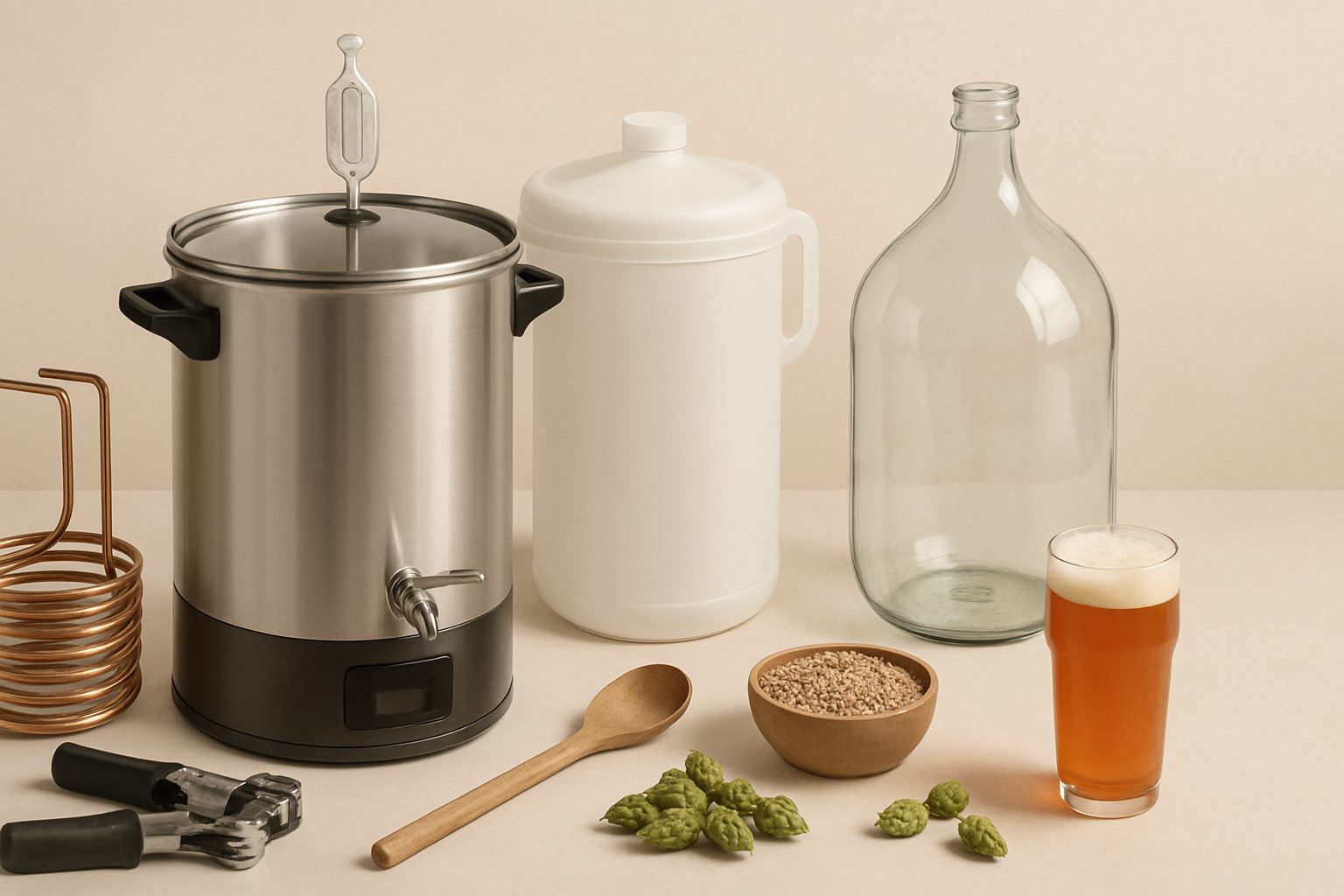
Home Brewing Equipment Bundles UK: What's Included and Are They Worth Buying?
Home brewing bundles promise convenience and savings, but whether they actually deliver depends entirely on what you're brewing and how serious you are about quality. A bundle that's perfect for someone making their first batch might be frustratingly limited for someone wanting to scale up, whilst a premium all-in-one kit could waste money on features you'll never use. Here's how to work out if a bundle is the right choice for you.
What's typically in a home brewing bundle?
A beginner's brewing bundle usually starts with the essentials: a fermentation vessel (typically 25-litre capacity), an airlock, a thermometer, and a hydrometer for measuring gravity. You'll get some sanitiser, basic instructions, and often a sample recipe or extract kit. Entry-level bundles often run £40–80 and are designed to get you brewing within a day of purchase.
Mid-range bundles (£80–150) add more useful kit. Expect a larger fermentation vessel, a siphon with tubing, a bottling wand, a capper with crown caps, cleaning brushes, and sometimes a temperature-controlled heating belt or cooling strips. These bundles assume you're serious enough to do multiple brews and want less faff with the bottling process.
Premium bundles (£150–300+) introduce semi-serious equipment: larger stainless steel or better-quality plastic vessels, refractometers instead of hydrometers, separate hoppers or ingredient scales, detailed recipe books, and sometimes grain mills or temperature controllers. Some include malt, hops, and yeast for your first batch.
All-grain bundles sit apart—they're designed for brewers moving beyond extract and include a mash tun, hot liquor tank, false bottom, and often a burner and stand. These start at £250 and can easily exceed £500.
How bundle pricing compares to individual purchases
The maths looks tempting on paper. A bundle selling for £100 containing a fermentation vessel (£25), airlock (£3), thermometer (£4), hydrometer (£8), sanitiser (£6), siphon (£8), and bottling wand (£7) appears to save you about £30 versus buying individually. In reality, the saving is smaller because bundle suppliers buy in volume and discount aggressively—but individual retailers also run sales and offer discounts for multiple purchases.
Where bundles genuinely save money is on shipping. If you're scattered across five different suppliers, you'll pay £5–8 in postage per order. Buying everything from one bundle avoids that tax.
The real hidden saving is in decision-making. Choosing compatible equipment from scratch is mentally taxing. A thought-through bundle takes that burden away, and the suppliers have already made sure the fermentation vessel's mouth matches your airlock, that your siphon tubing fits your bottling wand, and that the thermometer works in your temperature range. That's worth something.
When bundle deals make sense
A bundle is genuinely sensible if you're a complete beginner testing the hobby. Buying a £60 starter bundle lets you brew two or three batches and work out whether you actually enjoy it before committing £200+ to individual high-quality equipment. Many people discover they prefer cider or wine, or that they don't want to give up kitchen space—better to learn that on a cheap bundle.
Bundles also make sense if you're time-limited and don't want to research component compatibility. A reputable bundle has done that homework. You can spend three hours comparing airlocks and tubing sizes, or you can spend fifteen minutes buying a bundle and get brewing.
They're useful if you're buying for someone else and aren't sure what they'd want. A bundle is less likely to disappoint than a random piece of kit.
When you should buy components separately
The moment you're confident you'll brew regularly—more than four batches in the first year—buy components individually. Here's why: bundles often include compromise equipment. The thermometer might not read low enough for lagers. The plastic fermentation vessel might stain or absorb flavours after a few brews. The sanitiser included might not be the best option for your water.
If you have strong preferences—say, you want glass carboys over plastic, or you need specific gravity measurement via refractometer rather than hydrometer—a bundle will frustrate you because it's designed for flexibility, not preferences.
All-grain brewing especially demands individual kit selection. Your mash tun size depends on the grain volumes you plan to brew; your kettle size depends on your boil-off rate and target batch size; your heat source depends on your budget and garden setup. A bundle locks you into one brewery configuration when all-grain brewing is precisely about tailoring your setup.
Key things to check before buying a bundle
Capacity: A 25-litre fermentation vessel produces roughly 20 litres of finished beer. If you like to bottle in different styles and give gifts, 20 litres might feel small within a year. Check whether you're likely to outgrow it.
Material: Plastic is cheaper and lighter, but glass is more durable if you're rough with equipment. PET plastic (often used in bundles) can develop permanent stains that won't affect taste but look poor.
Upgrade path: A good bundle supplier sells compatible extras. If the bundle uses a particular airlock thread or bottling wand coupling, make sure you can easily buy replacements and upgrades later.
Included consumables: Check whether sanitiser, caps, and recipe components are genuine refills you can source elsewhere, or proprietary items that tie you to that supplier.
Reputation: Look for reviews mentioning missing parts, poor instructions, or equipment failures. Cheap bundles sometimes arrive with cracked vessels or missing components.
The honest takeaway
Home brewing bundles are worth buying if you're genuinely unsure whether you'll enjoy the hobby, or if you value convenience over choice. They're poor value if you've already decided you'll brew regularly and have strong preferences about equipment. For most beginners, a decent mid-range bundle (£80–120) is the sweet spot—cheap enough to bail out on without regret, complete enough to produce decent beer, and good enough that you won't immediately want to replace everything once you're hooked.
More options
- Grainfather G30 All-in-One Brewing System (Amazon UK)
- Brewzilla 35L All-in-One Electric Brewing System (Amazon UK)
- Home Brew Starter Kits (Amazon UK)
- Cornelius Keg & Home Draught Dispenser Systems (Amazon UK)
- Conical Fermenters & Fermentation Equipment (Amazon UK)