Best Home Brew IPA Kits UK 2025: Pre-Hopped Extracts to Full All-Grain Packs
Brewing your own IPA at home doesn't require years of experience or an industrial setup. A quality IPA kit gives you the right ingredients, tested recipes, and guidance to produce something genuinely better than many supermarket craft beers—and at a fraction of the cost. The UK market has matured considerably, with specialist breweries offering everything from quick malt extract brews to complex all-grain setups. Here's what actually works.
Why IPA kits are worth your time
IPAs demand balance: enough bitterness from hops to cut through the malt sweetness, but also aroma and character that make each sip interesting. This is precisely why kits work well for the style. Pre-selected hop varieties mean you're not gambling on freshness or compatibility. The recipe—tested and refined by experienced brewers—handles the chemistry.
Most IPA kits produce 40 pints of finished beer, and ingredient costs sit between £25–£50. That's roughly 50–60p per pint before carbonation and serving glassware, versus £3–£5 in the pub. The difference pays for your initial equipment investment within a few batches.
Extract vs. all-grain: where to start
Pre-hopped malt extract kits (Muntons Classic, Bulldog Brews entry level) are the fastest route. You steep speciality grains for 30 minutes, dissolve the extract, add water, pitch yeast. Total hands-on time: ninety minutes. They produce bright, clean IPAs, though some brewers find them slightly one-dimensional compared to all-grain.
All-grain kits (Brewferm, some Muntons Premium ranges) give you complete control over the grain bill, mash schedule, and hop schedule. They take 5–6 hours, require a bit more equipment, but reward you with richer malt character and better hop integration. If you're already hooked on homebrewing and want real versatility, all-grain is worth the step up.
Kit recommendations worth buying
Muntons Classic Range: Reliable workhorse kits found in most homebrew shops. The Classic IPA produces a clean, balanced 4.5% bitter with Cascade and Goldings hops—straightforward, Session-beer territory rather than full-blown American hop bomb. The clarity is excellent. At around £28–£32, this is the sensible choice if you want to check whether homebrewing fits your life before investing heavily.
Bulldog Brews Craft Kits: Made by Yorkshire brewers, these kits punch above their price point. The Bulldog IPA leans into American citrus hops (citra and centennial) and produces a noticeably bigger aroma than most extract alternatives. Malt body is fuller, too—you're tasting actual brewing decisions here, not just competent recipe design. Expect 5.2% ABV and a cost around £35–£40.
Brewferm All-Grain IPA: If you're ready for all-grain, Brewferm's kits are uncompromising. The base malt blend (typically pale and a touch of crystal for body) is spot-on, and the hop schedule isn't overloaded. You get genuine dry-hop aroma without extractive harshness. These sit at £45–£55, but you're controlling grain ratios and timing, which makes iteration possible. Brewferm instructions are thorough without being patronising.
What flavours to expect (and why they matter)
A well-executed IPA kit should deliver:
- Citrus top notes: Grapefruit, orange, occasionally pine. This comes from the aroma hops (late boil additions and dry hops).
- Herbal or grassy undertones: Earthy, sometimes vegetal. Common in British hop varieties; adds complexity.
- Clean, balanced bitterness: Not acrid or metallic. Hop bitterness should enhance the malt sweetness, not overpower it.
- Light to medium body: Not thin and watery, but not chewy either. Hop character should stand out.
If your finished brew tastes vinegary, oxidised, or flat, the issue is usually water quality, temperature control, or infection risk—not the kit. Most kits are formulated for hard UK tap water (chalk-filtered) and room-temperature fermentation (18–20°C).
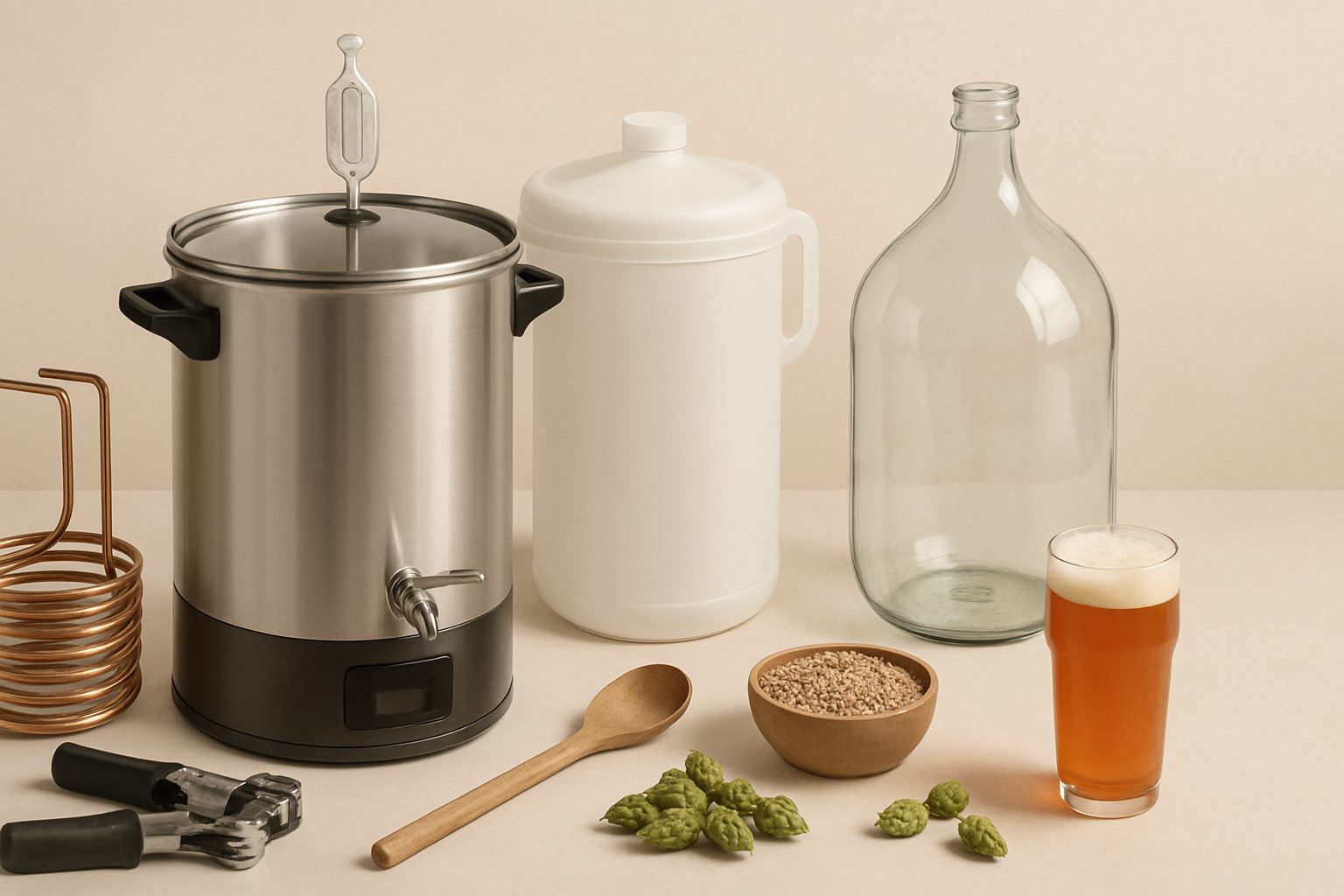
Beyond the kit: what you actually need
The kit itself gets you 60% of the way. You'll need:
- A 25–30 litre fermentation vessel with an airlock (plastic or glass; doesn't matter much)
- Sanitiser (sodium metabisulfite is cheap; StarSan is faster)
- A thermometer (digital is fine)
- Bottles or a keg, plus caps or a CO₂ system
- Patience during fermentation (7–10 days) and conditioning (2–4 weeks)
Some kits include sterilised bottles; most don't. Recycled beer bottles work perfectly if you've saved them.
Final thoughts
The best IPA kit depends on your commitment level. Starting out? Muntons Classic is honest and affordable. Confident enough to spend slightly more for noticeably better flavour? Bulldog Brews delivers. Ready to control every variable? Brewferm all-grain kits reward the extra effort.
IPA is also forgiving as a style—hops cover minor mistakes, clean-up is straightforward, and the fermentation is reliable. Your first batch won't be perfect, but it'll likely be better than you expect and substantially cheaper than buying equivalent craft beer. That's the real appeal: not perfection, but genuine pleasure for genuine value.
More options
- Grainfather G30 All-in-One Brewing System (Amazon UK)
- Brewzilla 35L All-in-One Electric Brewing System (Amazon UK)
- Home Brew Starter Kits (Amazon UK)
- Cornelius Keg & Home Draught Dispenser Systems (Amazon UK)
- Conical Fermenters & Fermentation Equipment (Amazon UK)