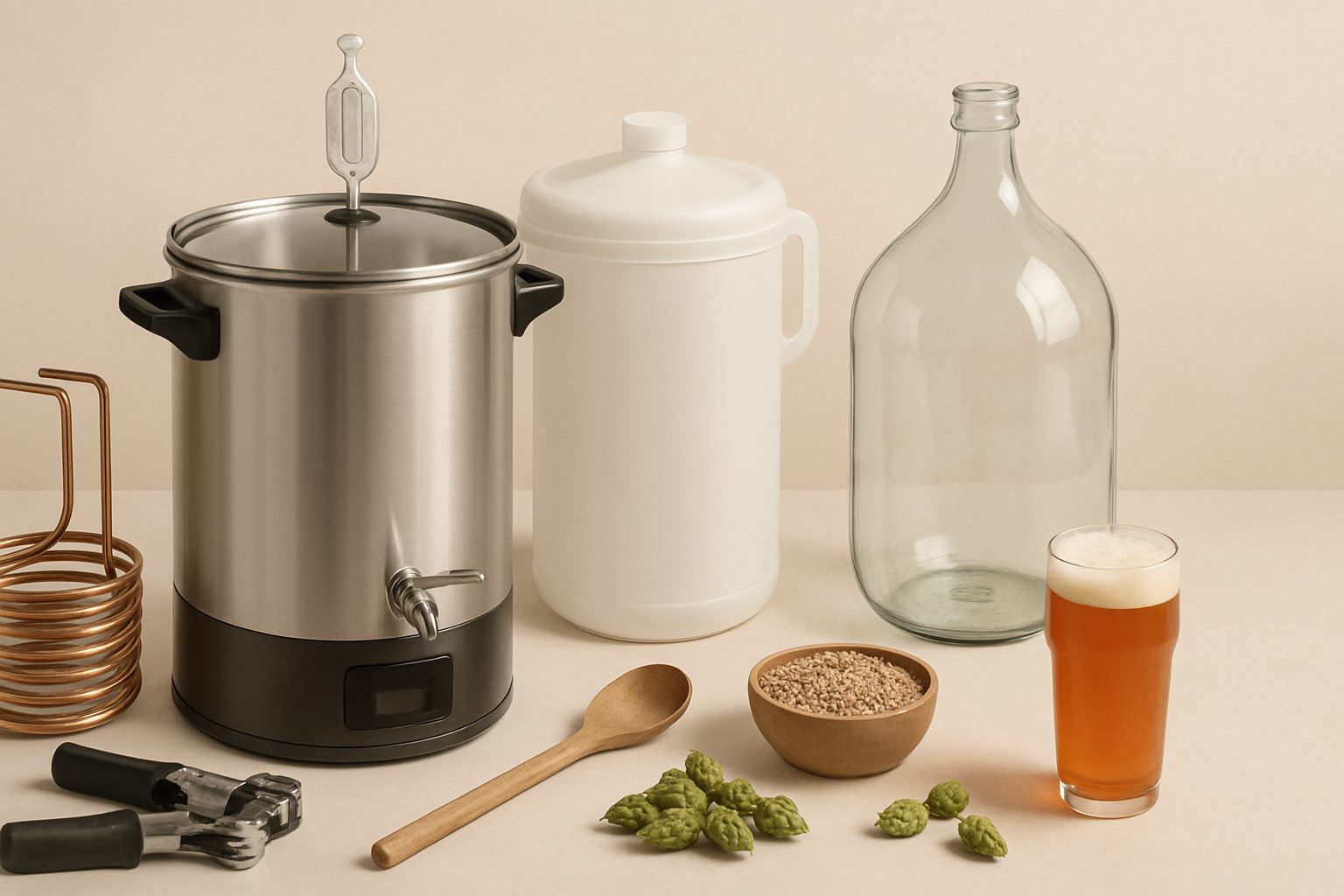
Best Conical Fermenters for Home Brewing UK 2025: Stainless Steel vs Plastic Reviewed
Choosing the right conical fermenter is one of the most important equipment decisions a home brewer makes. A quality conical sits at the heart of your brewing setup, handling fermentation, temperature control, and yeast harvesting. The UK market has solidified around a handful of serious options—and the gap between a decent one and a poor choice can mean the difference between clean, crisp ales and batches marred by off-flavours and stuck fermentations.
This guide compares the three fermenters that UK brewers actually buy: Spike, FastFerment, and Grainfather. We'll cover material choices, practical features, and what you're genuinely paying for.
Stainless Steel vs Plastic: Material Fundamentals
Stainless steel conicals are the premium choice. They're inert, won't degrade under UV light or temperature swings, and last decades with minimal maintenance. A good stainless fermenter costs £300–£1,200+, but it's a one-time purchase that justifies itself across hundreds of brews. Plastic conicals are lighter, cheaper (£80–£300), and perfectly functional for many brewers—but they scratch easily, can absorb odours over time, and need replacing every 5–10 years. Plastic also allows slightly more oxygen permeation during fermentation, which matters if you're ageing sours or barrel-aged beers long-term.
For most UK home brewers doing ales and lagers on a monthly cycle, plastic is adequate. For anyone brewing regularly and keeping fermenters long-term, stainless steel is the sensible investment.
Spike Brewing Conical Fermenter
Spike is an American manufacturer with a cult following among UK brewers serious about precision fermentation. Their conical comes in 7, 14, and 28-gallon sizes, constructed from 304 stainless steel with TIG-welded seams. The build quality is exceptional—every port, valve, and weld is finished to commercial brewery standards.
The 7-gallon Spike (about 27 litres, ideal for most UK homebrewers) runs around £450–£550. What you're paying for is reliability and yeast-harvesting efficiency. The conical geometry is steep, meaning settled yeast concentrates densely in the cone. You can harvest pure yeast layers after fermentation, then repitch multiple times. Spike's design also includes a thermowell for temperature probes, useful if you're running glycol or heating jackets.
The drawbacks: Spike fermenters are heavy (the 7-gallon weighs about 18 kg full), they take up significant floor space, and they're shipped from the US, which adds delivery cost and delay. You'll also need a chiller or temperature chamber to exploit the full potential—Spike fermenters work best with precise temperature control.
FastFerment Conical
FastFerment's conical (distributed in the UK through homebrew suppliers) is a lightweight plastic alternative that's popular with brewers wanting to try conical fermentation without the outlay. The 30-litre capacity suits UK batch sizes, and the price—typically £120–£160—makes it an entry point to serious fermentation.
The design is straightforward: a narrow PET plastic cone, wide shoulders, and a collection bottle at the bottom for trub separation. The cone angle is steeper than many cheap plastic fermenters, improving yeast settling. Yeast harvesting is practical; you can open the bottom valve after 48 hours and let trub settle, then collect clean yeast into a jar.
Limitations are real, though. The plastic degrades gradually under sunlight—you must store it indoors or wrapped. After five years of regular use, many brewers report discolouration and slight odour absorption. The top seal is a compression fitting that can weep if over-tightened. And because it's plastic, temperature control is less predictable; the material won't conduct heat as efficiently as stainless steel, making thermowell monitoring less useful.
FastFerment is honest value. It's not a compromise; it's a different category. Use it for ales, Kölsches, and young lagers, and replace it every 5–7 years.
Grainfather Conical
Grainfather's conical represents the middle ground: stainless steel construction at a lower price point than Spike. The 27-litre Grainfather (typically £320–£400) uses 304 stainless steel and is designed to integrate with the broader Grainfather ecosystem—their brewing controller, heating jackets, and chill-to-pitch systems.
The fermenter itself is compact and well-finished. The conical is less aggressive than Spike's (shallower angle), which means yeast settling is slightly slower and trub separation less dramatic. But for practical brewers, this is fine. The wider cone base is actually easier to clean than Spike's needle-point design, and the geometry means less yeast loss during harvesting.
Grainfather's real strength is integration. If you own or plan to buy a Grainfather controller and heating jacket, the conical fits seamlessly into a temperature-controlled fermentation setup. Standalone, it's a solid fermenter at reasonable cost.
The tradeoff: less prestige and slightly less efficient yeast harvesting than Spike, though in practical terms most brewers won't notice the difference.
Yeast Harvesting and Practical Reuse
All three fermenters support yeast harvesting, but efficiency varies. Spike's steep cone is genuinely superior for collecting dense yeast layers with minimal trub contamination. Grainfather's shallower cone still works well for most applications. FastFerment's design is functional but requires more care during collection.
Harvesting yeast reduces your brewing costs significantly—a clean harvest can support 5–8 repitches before quality declines. Over a year, that justifies a premium fermenter.
Which to Choose?
Choose Spike if you're brewing regularly (monthly or more), demand precision, plan to harvest and repitch yeast systematically, and can justify the investment. It's the best tool available.
Choose Grainfather if you want stainless steel without the premium price, or if you're building an integrated Grainfather system.
Choose FastFerment if you're new to conicals, brewing occasionally, or testing the concept before investing.
All three are reliable. The choice depends on your brewing frequency, budget, and commitment to fermentation precision.
More options
- Grainfather G30 All-in-One Brewing System (Amazon UK)
- Brewzilla 35L All-in-One Electric Brewing System (Amazon UK)
- Home Brew Starter Kits (Amazon UK)
- Cornelius Keg & Home Draught Dispenser Systems (Amazon UK)
- Conical Fermenters & Fermentation Equipment (Amazon UK)