All-Grain vs Extract Brewing Systems UK: Which Method Is Right for You?
Choosing between all-grain and extract brewing is one of the first big decisions you'll make as a home brewer. Both methods produce excellent beer, but they differ fundamentally in equipment, time investment, cost, and the level of control you have over flavour. Understanding these differences helps you pick the approach that actually fits your situation—not what marketing tells you that you should want.
What's the Difference?
Extract brewing uses malt extract, a concentrated syrup or powder created by professional breweries who've already converted grain starches into fermentable sugars. You add water, boil the extract with hops, and ferment. It's a shortcut through the most time-consuming part of brewing.
All-grain brewing starts with whole malted grains. You steep them in hot water to convert the starches yourself—a process called mashing. Then you separate the liquid (wort) from the grain husks, boil it with hops, and ferment. You're handling every stage.
Extract Brewing: Speed and Simplicity
Extract appeals most to new brewers and people with limited time. Your brew day is genuinely short: around 90 minutes from kettle to fermenter, compared to 4–5 hours for all-grain.
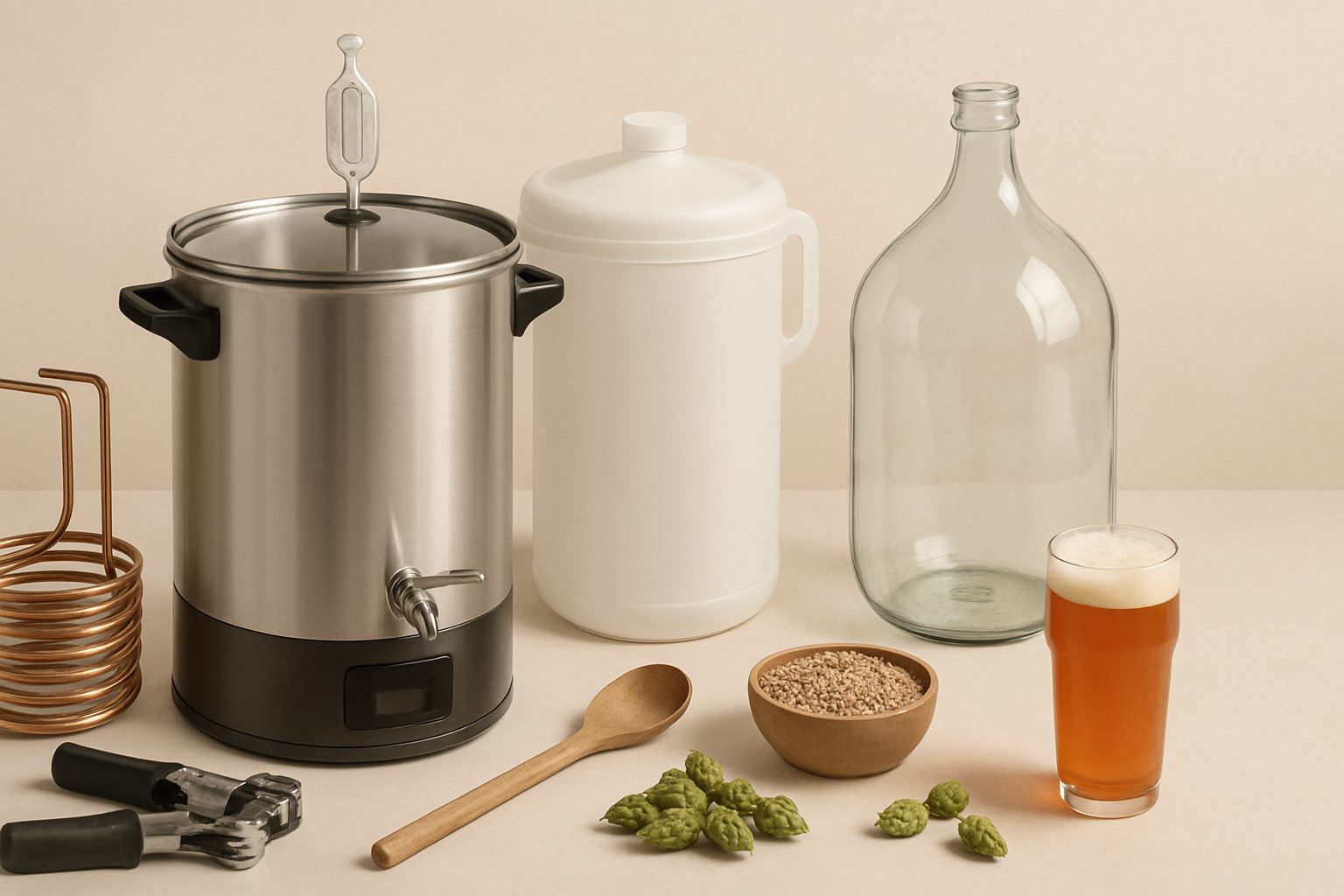
The equipment footprint is small. You need a large pot (at least 25–30 litres for a full boil), a stirring spoon, a thermometer, a hydrometer, and a fermenter with an airlock. If you're starting completely fresh, a good starter kit costs £60–£100. Many extract brewers use the same kit for years without upgrading.
The learning curve is gentler. You're not managing temperatures during the mash or worrying about water chemistry. You can make genuinely good beer before understanding why you're doing half the things you're doing—which is fine. Complexity can come later if you want it.
Flavour-wise, extract beer is genuinely not limited. You're working with quality malt that's already been converted; the limitations are more about hop freshness and fermentation care than the extract itself. Many experienced brewers still brew with extract by choice.
The trade-off is flexibility. Malt extract comes in standardized types: pale, amber, brown. If you want a specific grain bill—say, 60% Maris Otter, 25% crystal malt, 10% chocolate malt, and 5% roasted barley—you're guessing at which pre-blended extract comes closest. You can add small amounts of specialty grains for tweaking, but you're still working within a narrow range.
All-Grain Brewing: Control and Customization
All-grain is where you control everything. Want a beer that's exactly 62% Maris Otter, 25% crystal, and 13% wheat malt? Done. Adjusting mineral content to match a specific water profile? Standard practice. Experimenting with new grain varieties before they appear in commercial beers? Your choice.
The equipment demands are heavier. Beyond the extract brewer's kit, you need a mash tun (insulated container for steeping grain), a sparging system (to rinse sugars from the grain), and ideally a larger kettle if you're doing a full boil. A good all-grain starter setup—with a 30–40 litre pot and a basic three-tier system—costs £200–£350 new, though you can build something cheaper from used equipment or improvise with coolers.
Brew day is longer: 4–5 hours is normal. You're managing temperatures, controlling your mash schedule, sparging carefully, and dealing with more variables. Early batches often have small mistakes—a slightly low mash temperature, uneven sparging, or water that needs chemistry adjustments—that affect the final beer. You learn from them.
But here's the thing: once you're past your first five batches, all-grain becomes routine. The steps don't actually change much. You develop intuition for temperatures and timing. The process becomes meditative rather than stressful.
The flavor control is real, but honestly, the difference between a well-executed extract beer and a well-executed all-grain beer, tasted blind, is often imperceptible to most drinkers. The yeast choice, fermentation temperature, and hop freshness matter more than the brewing method.
Cost Over Time
Extract is cheaper upfront and stays cheap per batch. Ingredients for a 20-litre batch typically cost £20–£30. No waiting for equipment investment to "pay for itself"—you're brewing good beer immediately.
All-grain has higher initial equipment costs, but ingredients are roughly £15–£25 per batch once you've already bought your kit. The mash tun and sparging system represent the capital outlay. If you brew 20+ batches a year, the cost per beer eventually favors all-grain. If you brew 5–10 times a year, extract probably wins on total cost of ownership.
Practical Reality
Most UK home brewers don't need to choose one permanently. Many start with extract, brew 10–15 batches, then move to all-grain when they know whether they want that level of control. Some switch between methods depending on what they're brewing or how much free time they have that month.
If you value your time and brewing serves as relaxation rather than obsession, extract is genuinely sufficient forever. If you're interested in recipe design, grain characteristics, and understanding why different beers taste the way they do, all-grain rewards that curiosity.
The best choice is whichever one you'll actually use. A brewing system gathering dust because it's too complicated is worthless; a simple extract setup you use monthly is genuinely good.
More options
- Grainfather G30 All-in-One Brewing System (Amazon UK)
- Brewzilla 35L All-in-One Electric Brewing System (Amazon UK)
- Home Brew Starter Kits (Amazon UK)
- Cornelius Keg & Home Draught Dispenser Systems (Amazon UK)
- Conical Fermenters & Fermentation Equipment (Amazon UK)